How Gambling Ads and Live Betting Systems Correlate With Wagering Behavior

The pipeline that connects problematic, addiction-style behavior with the way the gambling industry operates is real. It may not yield conclusive data at the moment, especially given how hard it is to make uniform assumptions, but it still creates plenty of discourse around its dangers.
The truth is that the introduction of more advanced types of gambling activities has created an environment that you can characterize as spiraling out of control. From addiction rates to increasingly visible options to join the betting sphere, there’s always a new idea to draw on.
However, one of the truly fascinating points in this macro-discussion is live betting. Namely, the way it impacts bettors, brings additional revenue for those who field ads related to in-play gambling, and the way marketing can or cannot proceed in this sector.
In this article, we will explore this small part of the entire industry, but through a specific lens: the role and position of advertisements in the context of live betting. There is integration in this entire process since gambling operators will always try to secure engagement in any legal and relevant way.
We will discuss sports betting as a whole, and then we will showcase a few research points that give us a few ideas about the relationship between live wagering and advertisements. Let’s proceed!
Sports betting and its societal role
As it stands at the current moment, the sports betting market has reached a major point of contention. It’s certainly immense, reaching for new heights with every significant event in the sports world. This has made it a ubiquitous and undeniably controversial phenomenon.
However, the questions that people have fielded both online and in other public forums are whether it’s a reliable growth. Sustainability is almost as important as increasing revenue, especially if there are clear plans to retain a strong position in the overall market.
For this reason, there have been multiple marketing formats that have created a driving factor. One of the most visible ones is through ads, especially during live events or on digital platforms that provide live scores and stats.
This is why the sports betting industry, especially through its most visible brands, has felt so inevitable. As BetBrain’s iGaming portal shows us, they’ve also expanded their product every chance they’ve gotten, providing more and more odds for every possible event.
An increased level of exposure works around the human psyche in a way that is very likely to influence both behavior and the commercial bottom line. We’ll focus on the former aspect in the following section.
What does research tell us?
This is where we’ll come with a bifurcated pathway of analysis.
In the first subsection, we will present several findings via specialty reviews performed by trustworthy and peer-assessed entities. In the second one, we’ll present several (quasi) experiments that aim to see if there are relevant conclusions from practicality.
What you need to know before we present them is a caveat: they don’t work with either similar or uniform methodologies. This means that the analysis style differs quite significantly, which cannot simply lead to correlated results.
Instead, you should look at them in a vacuum, which can also mean a set of symptoms. Lobbyism can hardly allow these findings to turn into public awareness.
Key reviews and their correlations

Let’s begin with several scientific review articles that have talked about this particular aspect:
- A 2023 clinical correlates of sports betting article is our first entry, made up of the work of a series of scholars and published in the Journal of Gambling Studies.
- Its system review took clinical and sociodemographic data about sports betting people and found that problematic gambling is mostly associated with young, single males. Their issues with this activity lead to cognitive distortions and indicate an association with personality types related to compulsivity, impulsivity, and sensitivity.
- Another screening effort is a system review of worldwide gambling from 2022, compiling almost 2,500 articles from around the globe. Its synthesized findings are fascinating to say the least, showcasing a normalized level of sports betting marketing across the world, but especially in the UK and Australia. It alleges that responsible gambling can be effective, but to a limited degree.
- The third entry that we have here is another review of a gambling advertisement. The article comes from 2025, and its findings basically find a positive correlation between advertising and increased betting frequency.
The concerning part is that the supposed higher-risk gamblers are those who seem to feel a greater impact from the advertising efforts. The review relies on an observational approach, which limits the scope of its results.
Experiments and their conclusions
Now let’s move into this part where experiments have gathered data that has gone through a scholarly filter by trying to draw results that would give us some valuable intel:
- An experimental study on the 2022 World Cup has employed a randomized design that has enjoyed a strong reputation in academic literature. The research shows that a live game that showcased gambling-related advertisements presented up to 24% higher frequency of soccer betting, while the probability of placed wagers could rise to 33%.
It would validate the premise that increased visibility via advertisements stimulates bets. The same study, associated with the Euro 2024 betting market, showed that the usage of promotions (bonuses and other types of incentives) managed to drive the amount spent by over 105%.
However, the crucial part is that, of the 622 males who took part in the experiment, those with a history of problem gambling were those who opted to gamble the most easily.
- A systematic experiment published in 2025 took 112 sports bettors from the USA and tracked them throughout two years. It proved that the line that would correlate problem gambling with legalized/not-legalized gambling is, in fact, very thin.
- The last experiment that we wanted to showcase here is another 2026-published field experiment conducted in the US. It took sports bettors and used the idea of the ‘light touch’, which means that the wagering history and deposit limit tools would be the main subject of assessment. The concerning idea is that these voluntary elements saw little use by the participants.
Regulatory movement
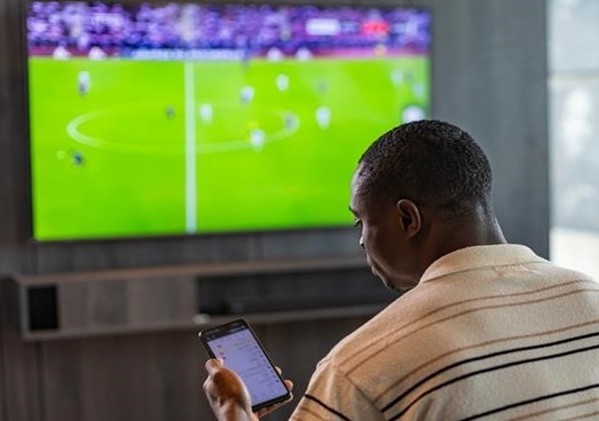
Most of what we’ve realized in the section above boils down to the fact that the official sphere may need to work with a bit of a tighter leash. Regulatory pressure and a stronger system of support for those affected by it are what can help this initiative.
There have been numerous projects that have floated around big markets with a lot of wagering volume. Some have seen interesting profiles and traction in legislative bodies, while others have suffered from the pressure of lobbies and interest groups.
The strongest example comes from the reintroduction of theSAFE Bet Act in 2025 by Representative Paul Tonko and Senator Richard Blumenthal.
The crux of the bill is to put pressure on federal agencies to increase surveillance on conduct associated with gambling addiction, conduct a national survey on its harm, and create state-wide self-exclusion lists.
The proposed piece of legislation has yet to gain traction in Congress, but it shows that even the upper echelon of sports betting consumption markets are looking for sharper options.
Conclusion: Will the 2026 World Cup yield more answers?
The idea that the 2026 World Cup will be even more revelatory is interesting and very likely. AI usage has risen dramatically ever since the last few major soccer events took place, especially the 2022 edition of the World Cup. They are relevant because they provide the biggest sample sizes.
This would mean that a broader data-collection methodology, coupled with faster and more effective synthesizing, stands to provide results that would prove rather centralized. It would be able to showcase any changes in behavior, if there are new or false correlations, and vet or disprove previous studies and experiments.
In conclusion, we have seen that live betting and simultaneous ads can lead to stimulated sports betting. It seems like we are on the precipice of finding new things with even wider applicability.
Regardless of what specialist literature tells us, responsible gambling retains a crucial role, and you should play carefully!


